What Does a Millwright Do? The Industrial Craftsman Explained
In an age dominated by automated manufacturing lines, high-output production plants, and complex mechanical infrastructure, modern industry depends on industrial machinery that operates with absolute geometric precision. When a massive steam turbine, a high-speed conveyor grid, or an industrial printing press needs to be erected, aligned, or overhauled, general mechanics and assembly workers do not possess the specialized training required to handle equipment weighing tens of thousands of pounds.
Facility managers, engineers, and plant operators facing complex installation projects invariably ask: what does a millwright do?
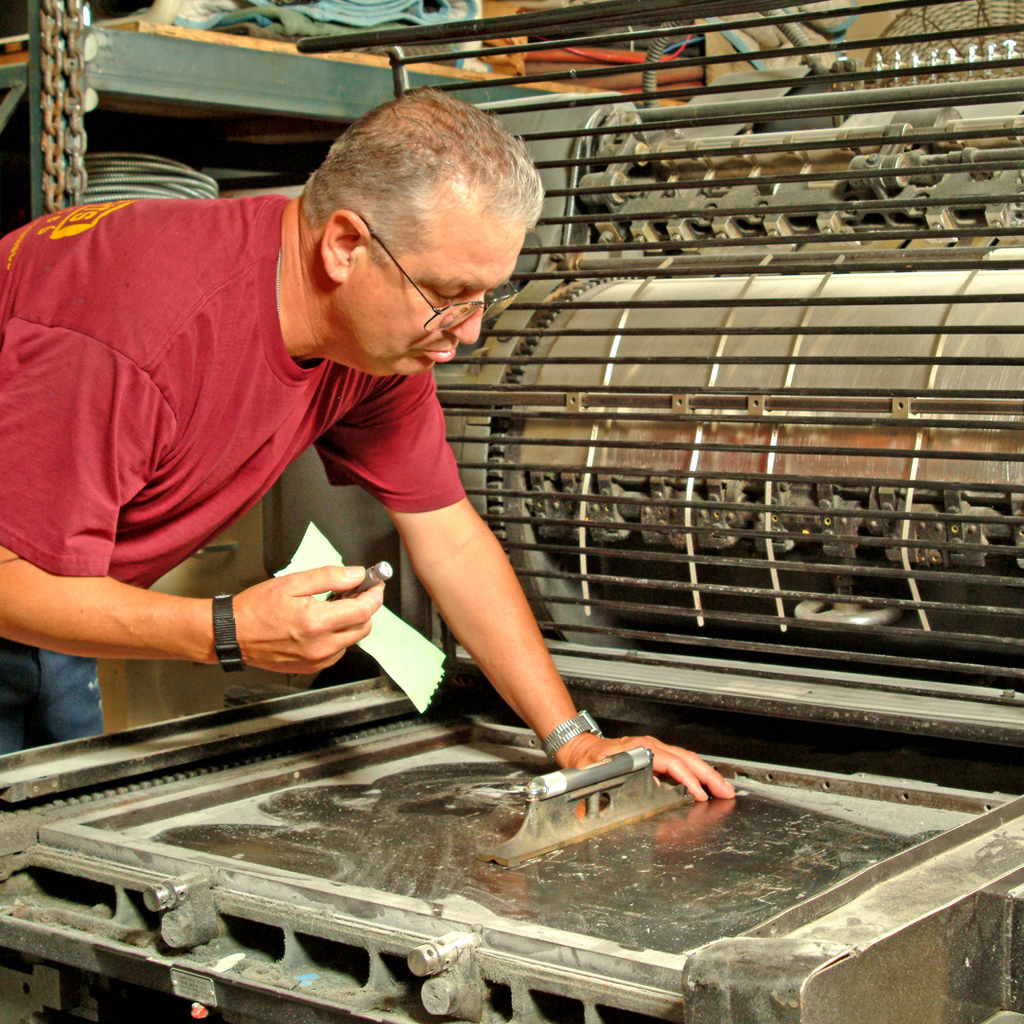
Millwrights are high-precision mechanical craftsmen who specialize in installing, dismantling, maintaining, diagnosing, and relocating industrial machinery. While the trade traces its historical origins back hundreds of years to craftsmen who built watermills and wooden gears, the modern millwright works on high-tolerance automated systems. Using a combination of heavy rigging rigging systems, optical laser alignment tools, and hydraulic torque wrenches, these skilled tradespeople ensure that billion-dollar manufacturing facilities operate safely and efficiently without unexpected downtime.
The Core Responsibilities of Modern Millwrights
To fully grasp the scope of the trade, one must look closely at how production equipment transitions from blueprint schematics into an active industrial facility. A millwright manages the mechanical life cycle of factory machinery from its initial delivery to its final decommissioning.
1. Rigging and Machinery Moving
Industrial machinery rarely arrives assembled in convenient packages. Large equipment arrives at job sites on flatbed trailers as modular steel sections weighing between 10 and 100 tons.
Millwrights are trained in the physics of rigging. They calculate load centers of gravity, inspect sling angles, determine crane pick points, and operate overhead hoists. Once inside an existing facility with limited vertical clearance, millwrights use specialized heavy-duty air casters, machine skates, and hydraulic jacks to maneuver massive machinery through narrow factory aisles without damaging surrounding structures or active utility lines.
2. Precision Foundation Setting and Grouting
Machinery longevity begins at the foundation. A high-speed rotating pump or heavy stamping press anchored improperly to concrete will tear itself apart from dynamic rotational vibration within weeks.
Millwrights shoot elevations using optical levels, layout transit lines, set anchor bolts into reinforced concrete pads, and mix specialized non-shrink epoxy grout. This grout creates a solid bond between the irregular surface of the concrete and the steel baseplate of the machine, dampening vibration and preventing future mechanical distortion.
3. Laser Shaft and Coupling Alignment
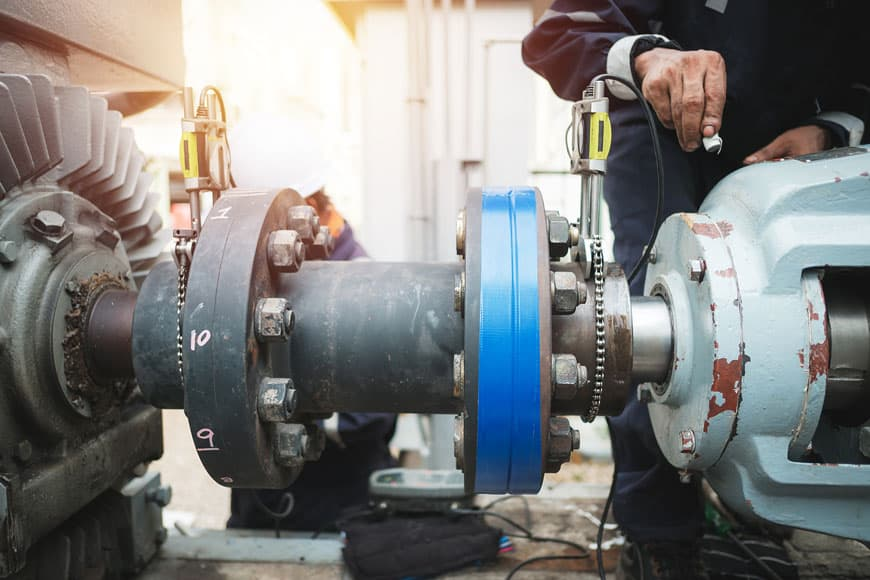
Connecting a powerful electric motor to an industrial pump, gearbox, or blower requires exceptional precision. If the driving shaft and the driven shaft are misaligned by more than a few thousandths of an inch—thinner than a human hair—the resulting mechanical stress will overheat bearings, shred elastomeric couplings, and snap shafts.
Modern millwrights utilize computerized dual-beam laser alignment equipment to measure angularity and offset across rotational axes, shimming motor feet down to micro-inch tolerances to achieve perfect operational balance.
Quick-Glance Summary: Millwrights vs. Adjacent Industrial Trades
The table below contrasts the millwright trade with related mechanical and electrical fields to clarify responsibilities across commercial and industrial job sites:
| Trade Discipline | Primary Work Focus | Key Tools & Technology | Typical Tolerance Standard | Working Environment |
| Industrial Millwright | Heavy machinery rigging, setting, laser alignment, mechanical rebuilds | Laser alignment systems, dial indicators, chain falls, micrometers | 0.001 to 0.0001 Inches (Micro-tolerances) | Manufacturing plants, paper mills, power stations, refineries |
| Pipefitter | Sizing, routing, welding, and installing fluid/gas piping loops | Pipe cutters, threaders, orbital welders, hydraulic benders | 1/16 to 1/8 Inch (System layout) | Industrial process plants, HVAC mechanical rooms, refineries |
| Industrial Electrician | Power distribution, PLC automation, sensory control wiring | Multimeters, wire strippers, conduit benders, insulation testers | Code-governed electrical standards | Switchgear rooms, control panels, plant raceways |
| Machinist | Manufacturing custom replacement parts from raw metal stock | Lathes, CNC mills, surface grinders, boring bars | 0.0005 to 0.00005 Inches (Part fabrication) | Dedicated machine shops, tool-and-die rooms |
| Ironworker | Erecting primary structural steel skeletons and safety netting | Spud wrenches, bull pins, connecting bars, rigging cables | 1/4 to 1/2 Inch (Structural plumb) | Open-air construction frameworks, high-elevation trusses |
The Essential Toolkit: From Dial Indicators to Laser Systems
When investigating what does a millwright do, looking at their tools offers valuable insight into their exacting standards. Unlike rough-carpentry or structural-framing trades where a fraction of an inch is acceptable, millwrighting operates in the realm of decimal thousandths.
Dial Test Indicators
The dial test indicator remains a foundational tool of the trade. Mounted to magnetic bases, these mechanical instruments translate microscopic physical deflections through internal gears to a circular needle face.
Millwrights sweep dial indicators across machine flanges to detect “soft foot” (where a machine base does not sit flat on its mounting plate), shaft runout (bending along the axis of rotation), and radial play inside roller bearings.
Stroboscopes and Vibration Analyzers
Modern industrial predictive maintenance relies heavily on sensory analysis. Millwrights use handheld vibration spectrum analyzers to monitor the health of enclosed bearings and gear meshes while machinery operates at full speed.
By analyzing acoustic and vibration frequencies, a technician can detect microscopic spalling on an inner bearing race months before the component fails, allowing plants to schedule repairs during planned maintenance outages rather than enduring catastrophic production halts.
Core Industrial Sectors That Depend on Millwright Services
Millwrights work across virtually every industry that relies on automated mechanical power. According to career and labor statistics published by the U.S. Bureau of Labor Statistics (BLS), employment opportunities for millwrights remain closely tied to manufacturing, capital equipment installations, and infrastructure modernization.
Power Generation and Heavy Utilities
In nuclear, hydroelectric, coal, and natural gas power plants, millwrights handle turbine overhauls. Disassembling a massive multi-stage steam turbine requires unbolting high-pressure casing halves that weigh dozens of tons.
Millwrights carefully hoist these casings, inspect rotor blades for micro-pitting, measure seal clearances using specialized feeler gauges, and re-torque giant stud bolts to manufacturer tension specifications.
Pulp, Paper, and Material Handling
Paper mills feature massive machinery lines that stretch several football fields in length. These machines run continuously, feeding paper webs across steam-heated roller cylinders at highway speeds.
Millwrights install and align the drive lines, dynamic balance large rolls, rebuild mechanical gear reducers, and service continuous wood-chipping systems under punishing, high-moisture conditions.
Water and Wastewater Infrastructure
Municipal treatment facilities rely on heavy mechanical systems to move, aerate, and filter millions of gallons of water every day. Millwrights set vertical turbine pumps, level massive rotating clarifier rakes, and install automated mechanical bar screens that clear incoming debris.
Because municipal water systems run nonstop, millwrights must execute replacements quickly to maintain clean community water reserves.
Preventative Maintenance and Planned Outages
A millwright’s work does not end once a machine begins spinning. In high-output manufacturing, unexpected equipment shutdowns can cost hundreds of thousands of dollars per hour in lost production and wasted materials.
A central part of a millwright’s ongoing mission is preventative and predictive maintenance:
- Lubrication Management: Verifying oil viscosity, maintaining centralized greasing distribution manifolds, and changing synthetic lubricants in industrial speed reducers.
- Component Rebuilding: Disassembling worn centrifugal pumps to press off bad bearings, replace mechanical face seals, and balance dynamic impellers before reassembly.
- Turnaround Management: Executing rapid equipment overhauls during scheduled plant shutdowns, working around the clock to remove worn machinery, rebuild gear sets, and reinstall systems before plant operations resume.
Why Professional Millwrighting Safeguards Industrial Assets
Attempting to set heavy industrial machinery with general maintenance crews or unqualified laborers creates serious financial and physical hazards. A dropped five-ton machine base, an incorrectly torqued coupling bolt, or a misaligned shaft can destroy expensive capital equipment and jeopardize job site safety.
Partnering with an experienced mechanical contractor like Walter N. Yoder & Sons ensures heavy machinery is rigged, transported, and installed according to rigorous industrial standards.
By leveraging over nine decades of regional contracting experience, Walter N. Yoder & Sons provides specialized millwright and machinery installation services for paper mills, manufacturing plants, and heavy commercial projects across Maryland and West Virginia. Relying on master tradespeople with access to commercial rigging hoists, precision laser systems, and custom fabrication support guarantees your industrial equipment is installed cleanly, operates safely, and delivers reliable production performance for decades.
Final Thoughts: The Unsung Heroes of Industrial Productivity
Behind every package moving through a fulfillment center, every watt of electricity flowing across the electrical grid, and every manufactured product rolling off an assembly line stands the skilled craftsmanship of an industrial millwright.
Understanding what does a millwright do reveals a unique combination of trade skills: the rigging strength of an ironworker, the microscopic precision of a machinist, and the diagnostic thinking of a mechanical engineer. By entrusting your heavy equipment moves, alignments, and maintenance overhauls to qualified millwrights, you ensure your industrial investments remain secure, efficient, and built to run.